Quick ViewAt a Glance
In Nigeria, purchasing sub-standard, expired, or counterfeit tyres is one of the leading causes of highway accidents and tyre blowouts. The high volume of cheap imports, uncertified brands, and roadside second-hand (tokunbo) tyres makes it easy for vehicle owners to make a dangerous mistake. To protect your family and ensure road safety, you must learn to read tyre DOT date codes, verify Standard Organization of Nigeria (SON) marks, and recognize the warning signs of regrooving or structural wear. Driving on old or counterfeit tyres in Nigeria’s hot climate accelerates tread wear and increases the risk of structural failure. To avoid the safety hazards of fake tyres, you should always purchase genuine tyre brands from authorized, certified dealers who provide product warranties.
Navigating the roads of Nigeria—from the intense heat and daily bumper-to-bumper traffic on the streets of Lagos to the high-speed highway routes of Abuja and Port Harcourt—places immense physical demand on your vehicle’s tyres. Your tyres are the only contact point between your car and the road, affecting your braking, handling, and passenger safety.
Unfortunately, Nigeria’s tyre market is flooded with low-quality imports, uncertified copycat brands, and expired used tyres. Many drivers, looking to save money, purchase roadside used tyres—commonly known as “tokunbo” tyres—or buy cheap unbranded alternatives. These practices have led to a high rate of tyre-related road accidents on major expressways.
If you want to protect your investment and keep your family safe, learning how to identify and buy original car tyres in Lagos is essential. In this buyer’s guide, we will break down the dangers of fake tyres Nigeria, compare tokunbo used tyres with brand-new premium tyres, explain how to read tyre date codes, and highlight the genuine tyre brands Nigeria that you can trust for durability and performance.
The Hidden Dangers of Cheap Counterfeit Tyres
A counterfeit or sub-standard tyre is one that has been manufactured with low-grade rubber compounds, thin steel belts, or poor ply designs, or one that has been fraudulently relabeled to look like a premium brand. Some unprincipled sellers import tyres designed for cold, snow-heavy climates (which feature soft rubber compounds that melt and fail under Nigeria’s high road temperatures) and relabel them as summer or tropical-grade tyres.
Mechanical Vulnerabilities of Sub-Standard Tyres
When you drive on cheap, uncertified tyres, you expose your vehicle to three major mechanical failure modes:
- Tread Separation: Premium tyres use high-tech bonding agents to fuse the rubber tread to the inner steel cords. In sub-standard tyres, these bonds are weak. Under the high friction and heat of Nigerian roads (which can exceed 50°C during the dry season), the tread can tear away from the steel casing, causing an instant loss of steering control.
- Sidewall Bulges and Bubbles: A tyre’s sidewall contains polyester and nylon cords that maintain its shape. Cheap tyres feature fewer ply layers. When hitting a pothole in Lagos, these inner cords break, allowing high-pressure air to push through the outer rubber, creating a bubble. A tyre with a sidewall bubble is a ticking time bomb and can blow out at any moment.
- Poor Heat Dissipation: Premium rubber compounds contain silica and heat stabilizers that help dissipate thermal energy. Cheap tyres trap heat. As the temperature rises, the air inside expands, raising tyre pressure and causing aged or weak casings to rupture.
Tokunbo vs. Brand New Tyres: The Risk Factor
Many drivers in Lagos and other parts of Nigeria view second-hand “tokunbo” tyres as a cost-effective alternative to new tyres. While they are cheap, tokunbo tyres are one of the highest safety risks you can place on your car.
Why Tokunbo Tyres Are Dangerous
1. Hidden Structural Weaknesses: You cannot see a tyre’s history by looking at it. Many used tyres are imported from Europe or North America, where they were discarded after accidents, hard impacts, or suspension alignment issues. They may look deep-treaded but have invisible internal casing separations.
2. The Hazard of Regrooving: Roadside sellers often use a special heated blade to carve new, deeper grooves into completely worn-out tyres. This process, known as regrooving, thins the rubber layer over the steel belts. This makes the tyre highly susceptible to punctures and blowouts under high speed.
3. Dry Rot and Rubber Aging: Even if a used tyre has never been driven on, rubber degrades naturally over time. Exposure to ozone and oxygen hardens the rubber, causing micro-cracks along the sidewalls and tread grooves. Hard rubber loses its wet-road grip, increasing your stopping distance.
To help you make the right choice, let’s compare new and used tyres head-to-head:
How to Read Tyre Date Codes and Markings
Every genuine tyre manufactured worldwide must feature standardized identification markings stamped on its sidewall. Learning how to read these codes is the best way to verify that a tyre is original and safe to drive.
1. The 4-Digit DOT Date Code
Look along the tyre sidewall near the wheel rim for the letters “DOT” followed by a series of characters. The last four digits of this sequence represent the week and year of manufacture.
- Format: `WWYY` (Week-Week-Year-Year)
- Example: If you see the code `1225`, it means the tyre was manufactured in the `12th week` of `2025`.
- The Rule of Thumb: Never purchase tyres that are more than 4 to 5 years old. Over time, tyres dry-rot and degrade, even if they have been sitting in a warehouse. If the DOT code is missing, rubbed off, or altered, do not buy the tyre.
2. Standard Organization of Nigeria (SON) Marks
To protect Nigerian consumers, the Standard Organization of Nigeria (SON) inspects and certifies tyres imported into the country. Genuine tyres will feature a SON compliance mark on the sidewall or label, showing they are certified for Nigeria’s high-temperature climate.
3. Load and Speed Ratings
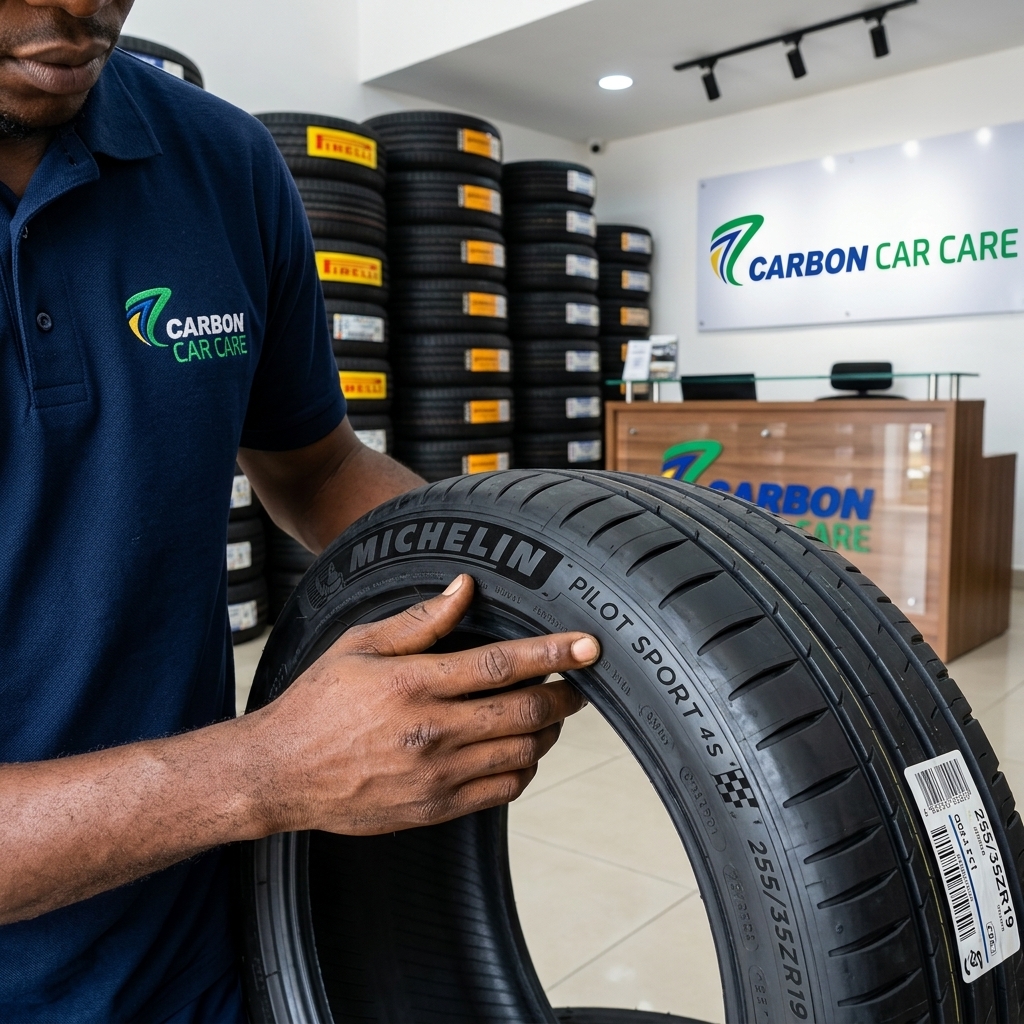
A tyre’s sidewall also includes its size and load limits. For example, in a size like `205/55R16 91V`, `91` is the load index (maximum weight) and `V` is the speed rating (maximum safe speed, where V represents 240 km/h). Fake or sub-standard tyres often display fake, high load indices or speed ratings that the tyre construction cannot support.
Genuine Tyre Brands in Nigeria
When buying new tyres, stick to authorized dealers that stock verified, genuine tyre brands. At Carbon365 Nigeria, we stock and distribute premium tyres engineered to withstand hot climates and rough road surfaces:
- Michelin Tyres: Global leader in wet grip and passenger comfort. Features advanced silica compounds that maintain flexibility and braking performance on wet highways.
- Dunlop Tyres: Extremely popular in Nigeria for durability, reinforced steel casings, and resistance to sidewall bulges. Exceptional value and long tread life.
- Bridgestone Tyres: Famous for long tread wear and heavy-duty casing durability, making them an excellent choice for SUVs and commercial vehicles.
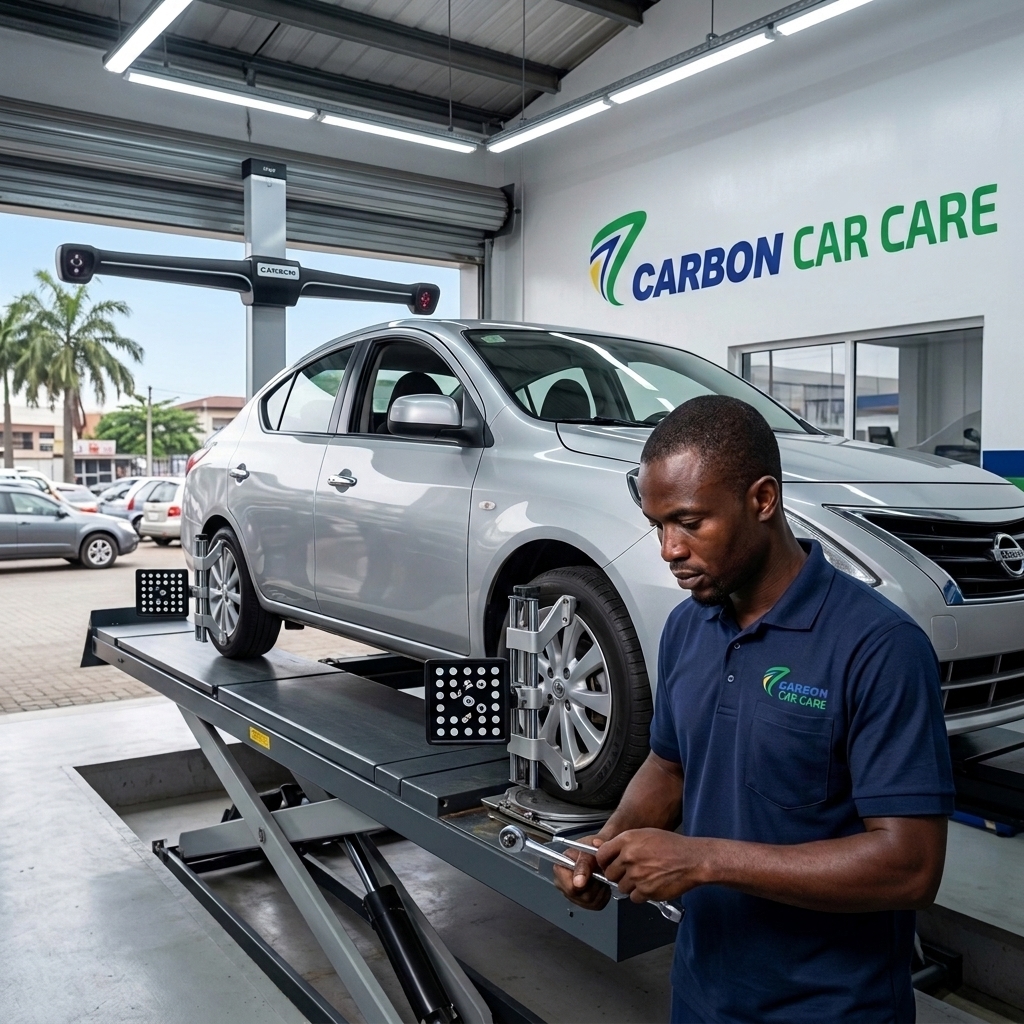
Proper wheel maintenance is also essential for extending tyre life. Even the best genuine tyre will wear out in a few months if your wheels are out of alignment. Always schedule a wheel alignment check when installing new tyres to protect your investment.
View Original Tyre Stock at Carbon365 Nigeria
Don’t risk your family’s safety on expired tokunbo tyres or cheap counterfeits. At Carbon365 Nigeria, we are certified distributors of original, fresh-stock tyres from leading global manufacturers. Every tyre we sell comes with a manufacturer warranty, standard SON certification, and professional fitting by our expert technicians.
Stay safe, save money, and drive with confidence. Contact the tyre experts at Carbon365 Nigeria to check our current inventory and schedule your tyre fitting today!
🙋 Frequently Asked Questions (FAQ)
1. How long do car tyres last in Nigeria’s climate?
Under normal driving conditions, a set of genuine new tyres will last between 40,000 and 60,000 km, or roughly 3 to 4 years. However, due to the high road temperatures and pothole damage in Nigeria, we recommend getting a professional tyre safety check every 10,000 km to inspect for tread wear, sidewall bubbles, and cracks.
2. Can a tyre store sell me an expired tyre that looks new?
Yes, absolutely. Tyres can degrade while sitting in a store warehouse. If a tyre is stored improperly under hot sun or moisture, it will dry-rot and harden. Always check the 4-digit DOT date code on the sidewall before purchasing new tyres, and reject any tyre that is more than 3 to 4 years old.
3. What is tyre regrooving, and why is it dangerous?
Regrooving is when roadside sellers use a heated blade to carve new tread grooves into a worn-out tyre. This hides the wear and makes the tyre look like it has deep tread. However, it removes the safety margin of rubber protecting the internal steel belts, making the tyre highly vulnerable to punctures, water ingress, rust, and sudden blowouts at highway speeds.
4. Why should I get an alignment check when replacing a tyre?
If your car’s suspension is misaligned, the wheels do not travel straight. This drags the tyres sideways, causing rapid, uneven tread wear on the shoulders. If you install a brand-new tyre on a misaligned vehicle, it will wear out in a fraction of its normal lifespan. Always align your wheels at the time of tyre replacement to protect your investment.