Quick ViewAt a Glance
Choosing the right tyres in Zambia is a critical safety decision that directly affects your vehicle’s performance and lifetime running costs. The combination of extreme seasonal heat and severe road hazards like potholes makes high-quality tyres a necessity. In this guide, we explore why premium tyres are essential, highlight the performance of Dunlop tyres on Zambian roads, explain how to spot dangerous counterfeit tyres in Lusaka, and provide a checklist for tyre maintenance. Protect your safety and your investment by choosing certified tyres and scheduling regular professional alignment checks.
Driving in Zambia—whether you are daily commuting along Cairo Road or Independence Avenue in Lusaka, navigating the busy commercial routes around Ndola and Kitwe, or taking long-distance weekend trips across the country—presents severe challenges for your vehicle. The tarmac on major transit roads can be unpredictable. Between extreme temperature fluctuations and sudden potholes, your tyres are under constant stress.
Your tyres are the single point of contact between your vehicle and the road. This makes them your most important safety component, as they affect steering precision, braking distance, fuel efficiency, and overall handling. If you are shopping for tyres at a tyre shop Lusaka or looking for the best deals on affordable tyres Zambia, making an informed choice is essential to avoid blowouts and maximize tyre life.
Why Your Tyre Choice Matters on Zambian Roads
Zambian roads present two primary environmental challenges to tyres: extreme summer heat and severe infrastructure hazards.
1. High Temperature and Rubber Degradation
During the hot months of September, October, and November, road surface temperatures in cities like Lusaka can climb to over 50°C. This extreme heat has two direct effects on tyres:
- Accelerated Wear: High pavement temperatures soften the rubber compound of tyres. This increases rolling resistance and causes the tread to wear down much faster than in cooler climates.
- Pressure Fluctuations: For every 10°C rise in temperature, tyre pressure increases by approximately 0.1 bar (1.4 PSI). Under-inflated tyres driven on hot roads run even hotter, leading to rapid tread separation and high-speed tyre blowouts.
Premium tyres are manufactured with advanced thermal stabilizers and specialized silica compounds that maintain structural stiffness at high road temperatures. This helps prevent heat-related failures.
2. Potholes and Sidewall Ruptures
When a car hits a pothole, the tyre is compressed between the metal wheel rim and the hard edge of the pavement.
- Sidewall Bulges (Bubbles): Cheap, low-quality tyres lack adequate internal ply reinforcement. The force of a pothole impact can break the inner nylon or steel cords, causing high-pressure air to push against the outer rubber layer and create a visible bulge. A tyre with a sidewall bulge is structurally compromised and must be replaced immediately.
- Wheel Damage: Premium tyres feature reinforced bead structures and thicker sidewall plies. These absorb the impact energy of potholes, protecting both the tyre and the expensive alloy wheel from cracking or bending.
Choosing tyres engineered for rough road conditions is critical for driving on routes like the Great East Road or the Kafue Road, where potholes are common.
Dunlop Tyres in Zambia — Performance & Longevity
Among the premium tyre brands available in the Zambian market, Dunlop has earned a strong reputation for durability, heat tolerance, and structural longevity. Originally established in the UK and now engineered with advanced Japanese technology under Sumitomo Rubber Industries, Dunlop tyres are built to handle rough road surfaces and high-temperature environments.
Why Choose Dunlop Tyres Zambia?
Dunlop tyres are engineered with several proprietary technologies that make them ideal for Zambian driving conditions:
- Reinforced Steel Belts and Ply Ratings: The internal carcass of Dunlop tyres is reinforced with high-tensile steel cords and additional nylon plies. This provides superior resistance to structural bruising, sidewall punctures, and internal carcass damage from road debris and pothole impacts.
- Advanced Silica-Rich Compounds: Dunlop’s tread compounds are formulated to resist high-temperature heat buildup. This prevents tread block tearing (chunking) and ensures the tread blocks remain stable and do not wear down prematurely during the hot season.
- Optimized Aquaplaning Resistance: During the rainy season, streets in Lusaka and Ndola can flood quickly. Dunlop tyres feature wide longitudinal grooves and lateral sipes that evacuate water efficiently, preventing hydroplaning and maintaining solid road contact.
- Multi-Pitch Tread Design: This design minimizes road noise on coarse tarmac, offering a quieter and more comfortable cabin experience for long highway trips between Lusaka and the Copperbelt.
Top Dunlop Tyre Models for Zambia
Depending on your vehicle type and driving style, different Dunlop tyres are recommended:
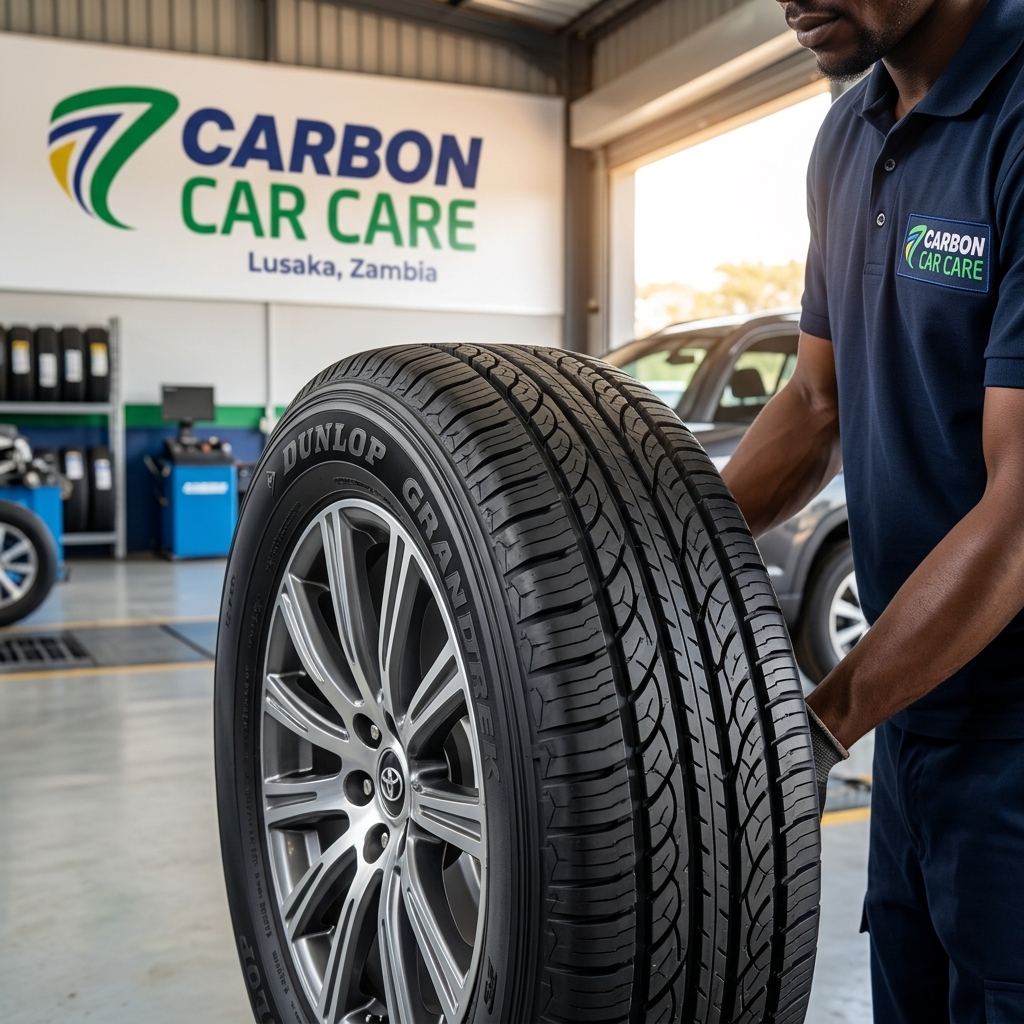
- Dunlop Grandtrek Series (AT5 / AT25 / AT3G): These are all-terrain tyres designed specifically for SUVs, light trucks, and 4×4 vehicles. They feature a super-reinforced sidewall (with 2-ply or 3-ply construction in specific sizes) and a deep tread pattern that provides excellent grip on gravel roads, mud, and paved city streets. The Grandtrek AT5, in particular, has a stone ejector block design that prevents sharp rocks from drilling into the tread and causing punctures.
- Dunlop SP Sport FM800: Designed for passenger cars and sedans, this model offers excellent wet-grip performance during the rainy season and durable tread wear for daily urban commuting on Cairo Road or Kafue Road.
- Dunlop SP Touring R1 / T1: A budget-friendly, durable passenger tyre engineered for high mileage, making it a popular choice for commercial taxi operators, delivery fleets, and daily commuters who need reliable, long-lasting performance.
- Dunlop Road Gripper: A legendary heavy-duty commercial tyre built with a robust rib-lug pattern, specifically designed for utility vehicles and commercial passenger vans traveling long distances on rough, unpaved terrain.
Purchasing your tyres from an authorized distributor like Carbon365 ensures you receive genuine Dunlop products backed by manufacturer warranties.
How to Spot Premium vs. Cheap Counterfeit Tyres in Lusaka
The Zambian automotive market has seen an increase in low-quality, uncertified, and counterfeit tyres. Roadside dealers often sell used tyres or cheap imports that do not meet standard safety requirements. Driving on these tyres increases the risk of sudden blowouts.
Use the checklist below to verify the authenticity and safety of any tyre before purchasing:
1. Check the DOT Date Code
Every tyre has a Department of Transportation (DOT) date code stamped on its sidewall. This is a four-digit code inside a small oval window.
- Example: A code of `1226` means the tyre was manufactured in the `12th week` of the year `2026`.
- Why it matters: Tyre rubber naturally dry-rots, hardens, and loses its grip over time, even if the tyre has never been driven on. Never purchase tyres that are more than 4 to 5 years old from their manufacturing date. Always verify this code before installation.
2. Verify International Safety Marks
Genuine tyres must display international certification symbols on the sidewall:
- E-Mark: Look for an “E” symbol followed by a number (e.g., `E4` or `E11`). This indicates the tyre complies with European safety standards.
- SABS/South African Standards: Since many tyres enter Zambia through southern trade routes, standard certifications like SABS indicate the tyre is rated for hot regional climates.
- SON/ZABS Standards: Check for ZABS (Zambia Bureau of Standards) compliance marks to ensure safety standards are met.
3. Inspect the Physical Condition of the Tyre
- Avoid Roadside “Tokunbo” (Used) Tyres: Roadside sellers often use chemical treatments or regrooving tools to carve deeper channels into worn-out tyres to make them look new. This reduces the rubber thickness to unsafe levels and increases the risk of blowouts.
- Check the Beads: Inspect the tyre bead (the inner edge that mounts to the wheel rim) for tears or damage. A damaged bead can leak air and cause tyre failure.
Guidelines for Choosing the Right Tyres
To get the best performance and value when shopping for best tyres Lusaka, follow these rules:
- Match Your Driving Environment: If you drive mostly on paved roads, highway-terrain (HT) tyres will provide the quietest ride and best fuel economy. If your route includes gravel roads or construction sites, choose all-terrain (AT) tyres with reinforced sidewalls.
- Load and Speed Ratings: Verify the load index and speed rating on the sidewall to make sure they match your vehicle’s manufacturer specifications. Under-rated tyres can overheat and fail when carrying heavy loads.
- Always Buy in Pairs: Replacing a single tyre can cause uneven braking and handling. For safety, replace tyres in pairs across the same axle (both front or both rear).
Frequently Asked Questions (FAQ)
1. Is it safe to drive on second-hand tyres?
No. Second-hand tyres often have hidden internal damage, micro-cracks, and structural fatigue from previous impacts that are not visible to the naked eye. They are highly susceptible to sudden blowouts at highway speeds and are not recommended for passenger vehicles.
2. Why does my steering wheel vibrate at highway speeds?
A vibrating steering wheel usually indicates that your wheels are out of balance. Over time, tyres wear unevenly, causing weight distribution imbalances. Getting your wheels balanced at Carbon365 restores smooth ride quality and prevents suspension wear.
3. How often should I check my wheel alignment in Zambia?
Given the road conditions and potholes in Zambia, we recommend checking your wheel alignment every 10,000 km, or immediately if your vehicle pulls to one side or after hitting a major pothole or curb.
Find Premium Tyres at Carbon365 Lusaka
Keep your drive safe and smooth. Contact the team at Carbon365 Zambia to check your tyres or book a precision alignment today!