Quick ViewAt a Glance
For vehicle owners in Lusaka, the intense Zambian sun, abrasive red dust, and harsh roadside car washes are constant threats to their car’s paintwork. Over time, these environmental factors oxidize the clear coat, causing paint to fade, lose its gloss, and develop severe swirl marks. To protect your vehicle’s paint and maintain its resale value, two main options are available: traditional car waxing and modern ceramic coatings. Traditional waxing provides a brief, high-gloss shine that lasts 4 to 8 weeks and requires frequent reapplication. Professional ceramic coating, however, uses nanotechnology to chemically bond with your car’s clear coat, creating a semi-permanent, hydrophobic shield that protects against UV rays, chemical stains, and minor scratches for several years. To secure long-term paint protection and keep your car looking brand new in Zambia’s climate, a professional ceramic coating is the superior investment.
Owning a premium vehicle in Lusaka—whether you are driving along the busy streets of Great East Road, navigating the commercial corridors of Cairo Road, or parking in the sunny lots of Manda Hill and East Park Mall—presents a unique set of challenges for maintaining your car’s exterior appearance. Zambia’s climate is beautiful, but the weather is particularly harsh on automotive paint.
Between the scorching high-UV sunshine of the dry season, the acidic rain of the wet season, and the fine, abrasive red dust that blows off secondary gravel roads, your car’s paint is under constant attack. If left unprotected, a vehicle’s clear coat will quickly oxidize, turning a deep, rich color into a dull, chalky surface.
To prevent this paint degradation, vehicle owners must choose a reliable paint protection method. While many drivers are familiar with traditional car washing and waxing, a growing number of luxury and premium car owners are turning to advanced ceramic coating Lusaka Zambia services.
In this ultimate guide, we will break down why the Zambian environment damages automotive paint, compare traditional car wax with modern ceramic coatings, evaluate their costs, and help you select the best paint protection Zambia solution to preserve your vehicle’s gloss and resale value.
Why the Zambian Sun and Dust Damage Paint
Automotive paint consists of three main layers: the primer (which prevents rust), the base coat (which provides the color), and the clear coat (the transparent outer layer that protects the color and provides gloss). When environmental hazards hit your car, they attack the clear coat first.
In Lusaka, three main factors accelerate clear coat damage:
1. Scorching UV Rays and Paint Oxidation
Zambia’s high altitude and tropical location mean it receives intense ultraviolet (UV) radiation. Just as UV rays cause sunburn on human skin, they break down the chemical polymers in automotive clear coats. This process, known as oxidation, causes the paint binder to fail, leading to fading, chalkiness, and eventually peeling (clear coat failure).
2. Abrasive Red Dust and Swirl Marks
Lusaka’s dry season brings a large volume of fine, mineral-rich red dust. When this dust settles on your car, it acts like a mild sandpaper. If you use a dry cloth or a standard car wash Lusaka service that uses dirty sponges and harsh towels, these dust particles are dragged across the paint. This creates thousands of microscopic scratches, known as “swirl marks” or “spiderwebbing,” which scatter light and ruin the paint’s gloss.
3. Acidic Tree Sap, Bird Droppings, and Chemical Stains
Parking under trees in suburban areas like Leopards Hill or Kabulonga exposes your car to bird droppings and tree sap. These organic compounds are highly acidic. When baked by the hot Zambian sun, they etch directly into the clear coat in a matter of hours, leaving permanent, ugly chemical stains that cannot be washed off.
What is Ceramic Coating and How Does it Work?
Unlike traditional car wax, which sits on top of the paint surface as a temporary barrier, a professional ceramic coating is a liquid polymer that uses nanotechnology to bond with the paint. Typically formulated with Silicon Dioxide (SiO2) or Titanium Dioxide (TiO2), the coating fills in the microscopic pores of your car’s clear coat.
The Nanotechnology Chemical Bond
When applied by a certified technician at a professional car detailing Lusaka bay, the liquid ceramic coating cures and cross-links with the clear coat. This chemical reaction creates a hard, glass-like layer that becomes a semi-permanent extension of your car’s paintwork.
Key properties of a professional ceramic coating include:
- Extreme Hydrophobic Effect: The coated surface becomes highly water-repellent. Water beads up and rolls off easily, carrying away loose dust and dirt with it. This is known as the “self-cleaning” effect.
- UV Blockers: The SiO2 layer acts as a solar shield, absorbing and reflecting UV radiation to prevent paint oxidation and fading.
- Chemical Resistance: The coating creates an inert barrier that resists etching from acidic bird droppings, tree sap, and road salts.
- Deep Reflective Gloss: By filling in the clear coat pores, the coating creates a perfectly flat surface that reflects light like a mirror, producing an intense, wet-looking gloss.
Comparing Ceramic Coating vs. Car Wax
To help you understand which option is right for your budget and protection goals, let’s look at a head-to-head comparison:
The Car Detailing Process: Preparation is Key
Many car owners believe that applying a ceramic coating is as simple as wiping a liquid onto the paint. In reality, the application is only 20% of the work. The remaining 80% is the meticulous preparation required to ensure the coating bonds correctly.
Applying a ceramic coating over scratches or swirl marks will lock them in under the glass layer forever. A professional detailing process at Carbon365 Lusaka includes:
1. Decontamination Wash: The vehicle is washed using specialized pH-neutral strip shampoos to remove old waxes and sealants. This is followed by an iron-decontamination spray and a clay bar treatment to pull embedded road grime and industrial dust out of the paint pores.
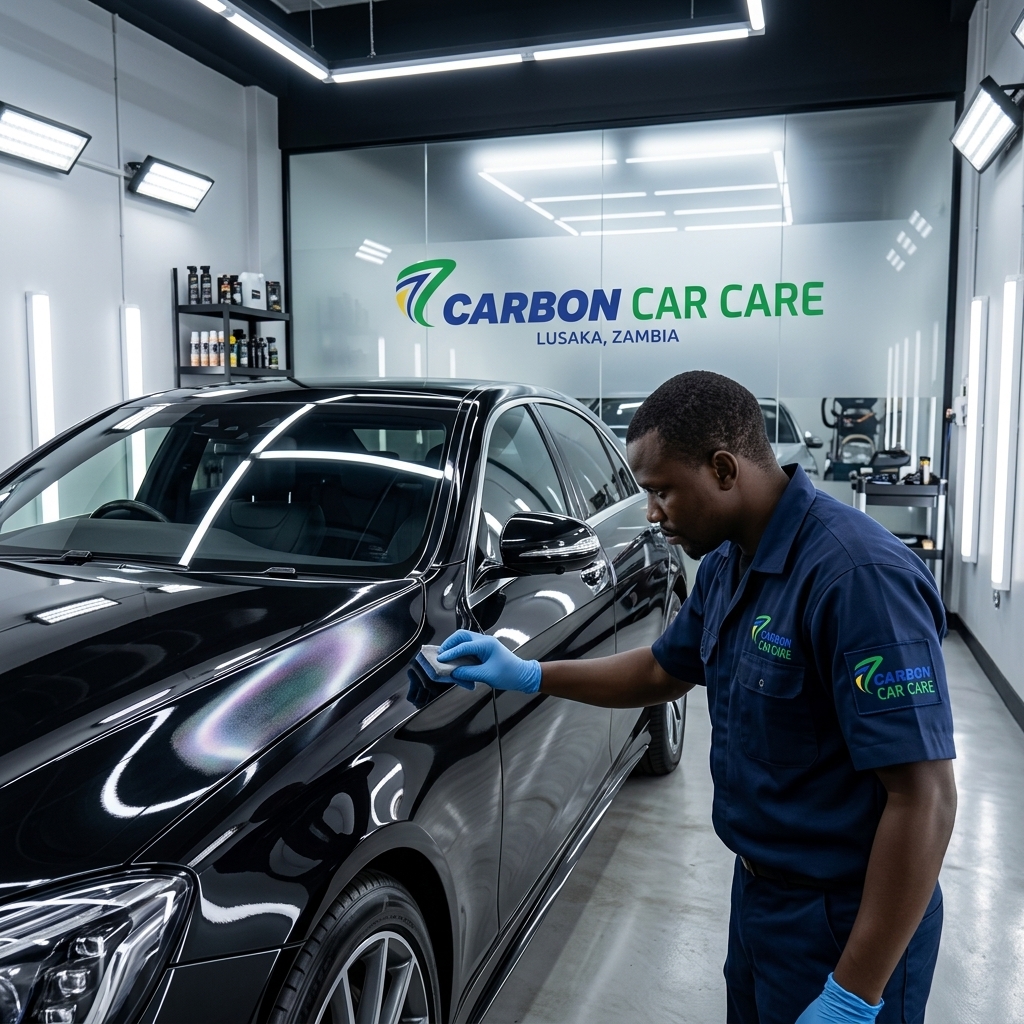
2. Paint Correction (Machine Polishing): Technicians use dual-action rotary polishers with specialized compounding pads and polishing liquids to correct paint defects. This step removes swirl marks, fine scratches, and oxidation, restoring the clear coat to a flat, glossy finish.
3. Panel Prep Wipe Down: The paint is wiped down with an isopropyl alcohol (IPA) solution to remove any remaining polishing oils, ensuring the clear coat is completely clean.
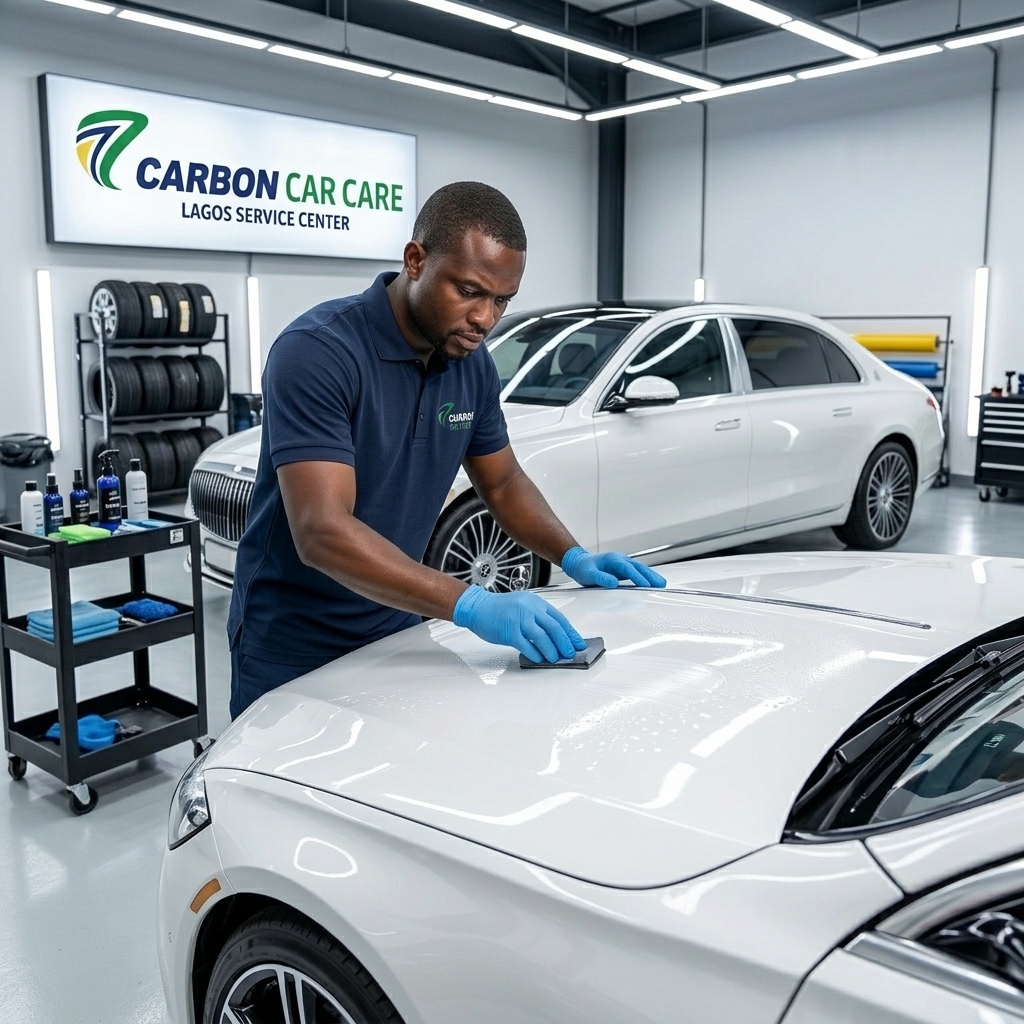
4. Coating Application: The ceramic liquid is applied section-by-section using an applicator block. After a brief curing window, the excess product is buffed away using premium microfiber towels.
5. Curing Period: The vehicle must cure in a dust-free, indoor environment for at least 12 to 24 hours to allow the chemical bond to fully harden before it is exposed to rain or dust.
Book a Detailing Consultation in Lusaka
Don’t let the intense Lusaka sun and abrasive dust ruin your vehicle’s paintwork and destroy its resale value. At Carbon365 Lusaka, our certified detailing specialists utilize premium-grade graphene and ceramic coatings, combined with professional multi-stage paint correction, to lock in an unmatched gloss and provide years of durable protection.
Preserve your car’s beauty and make maintenance easy. Contact the expert detailing team at Carbon365 Lusaka to schedule a custom paint evaluation today!
🙋 Frequently Asked Questions (FAQ)
1. Does a ceramic coating protect against rock chips and deep scratches?
No, a ceramic coating does not protect against impact damage like rock chips or deep key scratches. It creates a thin, hard micro-barrier (typically 9H hardness) that resists light wash swirls, towel scratches, and brush marks, but it cannot absorb the impact of a stone thrown at highway speeds. For impact protection, Paint Protection Film (PPF) is required.
2. Can I wash my ceramic-coated car at a normal roadside car wash?
We advise against it. Roadside car washes often use harsh household detergents (like dish soap) and dirty sponges that trap abrasive dust, which will scratch the coating and reduce its gloss over time. To maintain the hydrophobic performance of your coating, use pH-neutral car shampoos and clean microfiber wash mitts, or bring your car to a professional detailer for maintenance.
3. How long does a professional ceramic coating application take?
A proper ceramic coating application is a multi-step process that requires significant paint correction. Depending on the size of your vehicle and the condition of the paint (how many scratches need correction), the process typically takes between 24 and 48 hours. This includes the wash, decontamination, paint correction, application, and overnight curing.
4. Is ceramic coating worth the cost for older vehicles?
Yes, absolutely. A ceramic coating is one of the best ways to restore and preserve an older vehicle’s appearance. The multi-stage paint correction process removes years of built-up swirl marks, scratches, and oxidation, while the coating locks in the restored gloss, protecting the remaining clear coat from further wear.