Quick ViewAt a Glance
Navigating Lusaka’s roads during the pothole season requires more than just careful driving; it demands the right equipment and proactive maintenance. Selecting the correct tyres, maintaining optimal tyre pressure, and ensuring your wheels are perfectly aligned are your primary defenses against rim damage and tyre blowouts. Tyres with reinforced sidewalls offer superior resistance to impact damage, while regular 3D wheel alignment ensures your vehicle handles predictably when dodging obstacles. By implementing a few key strategies, you can significantly reduce the risk of expensive suspension and tyre repairs. For expert tyre advice and precision alignment services, visit Carbon365 in Lusaka.
The transition between dry and rainy seasons in Zambia brings an inevitable challenge for every driver in Lusaka: the sudden multiplication of potholes. From the bustling Great East Road to quieter residential streets in Kabulonga and Woodlands, potholes seem to appear overnight, turning daily commutes into a stressful exercise in evasive driving.
While you cannot control the condition of the roads, you have total control over how prepared your vehicle is to handle them. The tyres you choose and the way you maintain your vehicle’s alignment are the two most critical factors in surviving pothole season without a costly trip to the mechanic.
In this comprehensive guide, we will explore practical strategies to protect your vehicle from impact damage, highlight the best tyres for potholes in Zambia, and explain why alignment practices are essential for Lusaka drivers.
How Under-inflation Increases Rim and Tyre Damage from Potholes
One of the most common mistakes drivers in Lusaka make is neglecting their tyre pressure. Your tyres are the only point of contact between your two-ton vehicle and the road. They are designed to act as flexible cushions, absorbing minor impacts and vibrations. However, they can only do this effectively if they are inflated to the correct pressure.
The Danger of the “Pinch Shock”
When a tyre is under-inflated, the sidewall lacks the rigidity needed to support the vehicle’s weight during a sudden impact. When you hit a sharp-edged pothole with an under-inflated tyre, the tyre completely compresses. The pothole’s edge forces the rubber tread to violently pinch against the metal rim of the wheel.
This phenomenon, known as a “pinch shock” or “snake bite,” almost always results in a catastrophic tyre failure. The impact severs the internal steel belts and fabric cords of the tyre, causing a blowout or creating a large, dangerous bubble on the sidewall. Furthermore, because the tyre bottomed out, the full force of the impact is transferred directly to the rim, often bending or cracking alloy wheels.
Maintaining Optimal Pressure
To defend against pothole damage, you must check your tyre pressure every two weeks, particularly when temperatures fluctuate. Always refer to the manufacturer’s recommended tyre pressure, which is usually found on a sticker inside the driver’s door jamb, not the maximum pressure printed on the tyre’s sidewall. Keeping your tyres properly inflated provides the necessary buffer to absorb impacts without allowing the rim to strike the road surface.
Reinforced Sidewall Tyres: A Smarter Choice for Zambia
Not all tyres are created equal. While standard passenger tyres might be suitable for smooth, predictable highways in other parts of the world, Lusaka’s demanding road conditions require something more robust.
If you frequently travel on pothole-heavy routes, you should seriously consider investing in tyres with reinforced sidewalls or specific impact-resistant technologies.
Understanding Load Ratings and XL Tyres
When shopping for tyres at a tyre shop Lusaka, look for the “XL” (Extra Load) designation. XL tyres are engineered with a stronger internal structure and stiffer sidewalls compared to standard load (SL) tyres of the same size. This reinforcement allows them to carry heavier loads and, more importantly, withstand greater impacts without suffering structural failure.
The stiffer sidewall of an XL tyre means it is far less likely to compress fully during a pothole strike, drastically reducing the risk of pinch shocks and rim damage.
Recommended Brands for Zambian Roads
At Carbon365, we stock premium brands that have proven their durability on Zambian roads:
1. Dunlop Tyres: Known for their robust construction, many Dunlop Zambia options feature enhanced sidewall protection that resists cuts and impacts from sharp pavement edges.
2. Bridgestone: Their Dueler and Turanza ranges offer excellent durability and puncture resistance, making them ideal for both city driving and off-road excursions.
3. All-Terrain (A/T) Options: For SUVs and double-cabs, switching to an All-Terrain tyre provides a thicker tread block and tougher rubber compounds, offering maximum defense against the worst potholes.
While premium, reinforced tyres may cost slightly more upfront, they save you money in the long run by surviving impacts that would destroy cheaper, thinner-walled budget tyres.
The Role of Regular 3D Wheel Alignment in Preventing Tyre Blowouts
Even if you have the strongest tyres inflated to the perfect pressure, hitting a pothole can still cause hidden damage that threatens your safety: wheel misalignment.
The sudden, violent force of a pothole impact can easily bend control arms, shift the steering rack, and knock the wheels out of their factory-set angles. When this happens, your vehicle is no longer driving straight.
How Misalignment Causes Blowouts
When a car is misaligned, the tyres are dragged across the pavement rather than rolling smoothly. This creates immense friction and heat. Over a surprisingly short period, this friction scrubs away the rubber on the inner or outer edge of the tyre.
If left unchecked, the tread will wear down entirely, exposing the internal steel belts. Once the belts are exposed, the tyre’s structural integrity is compromised, and a high-speed blowout becomes highly likely. Many drivers are completely unaware of this uneven wear because the damage occurs on the inside edge of the tyre, hidden from view.
Why 3D Laser Alignment is Essential
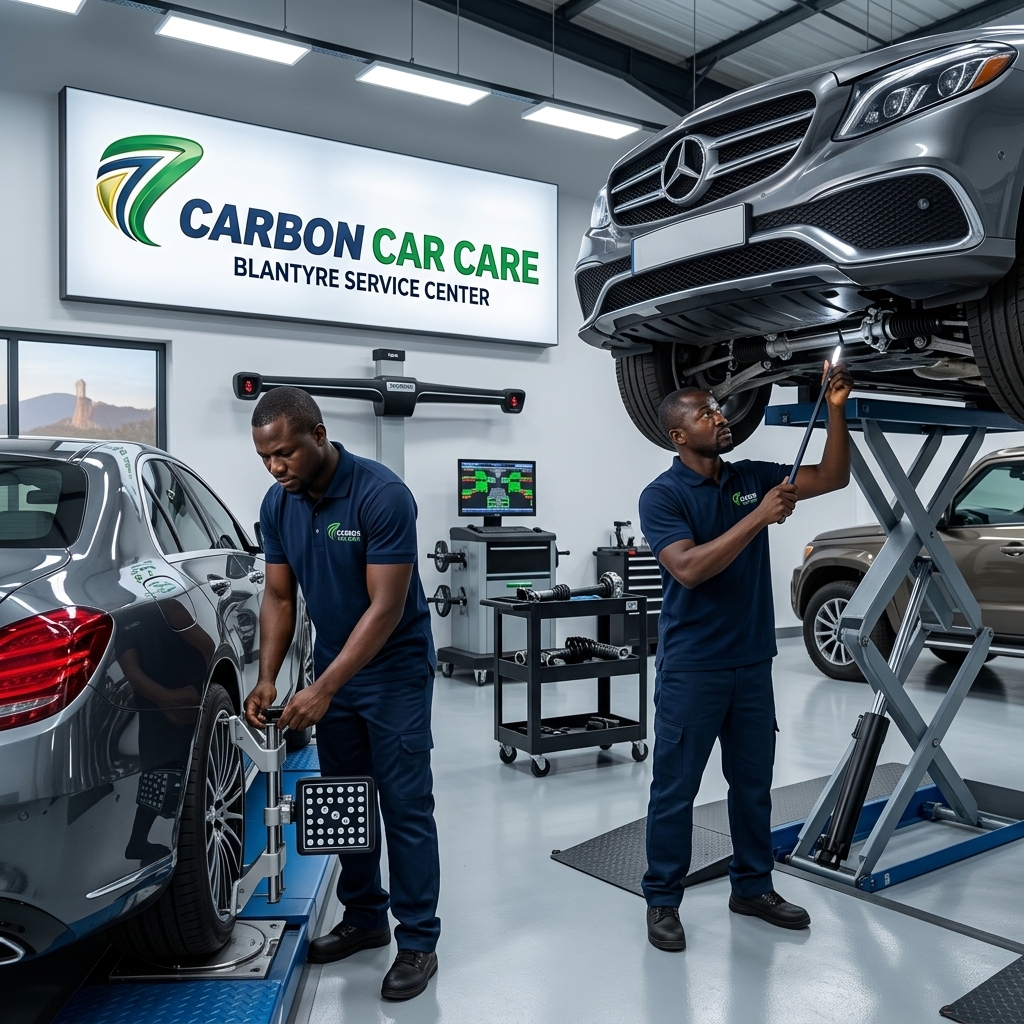
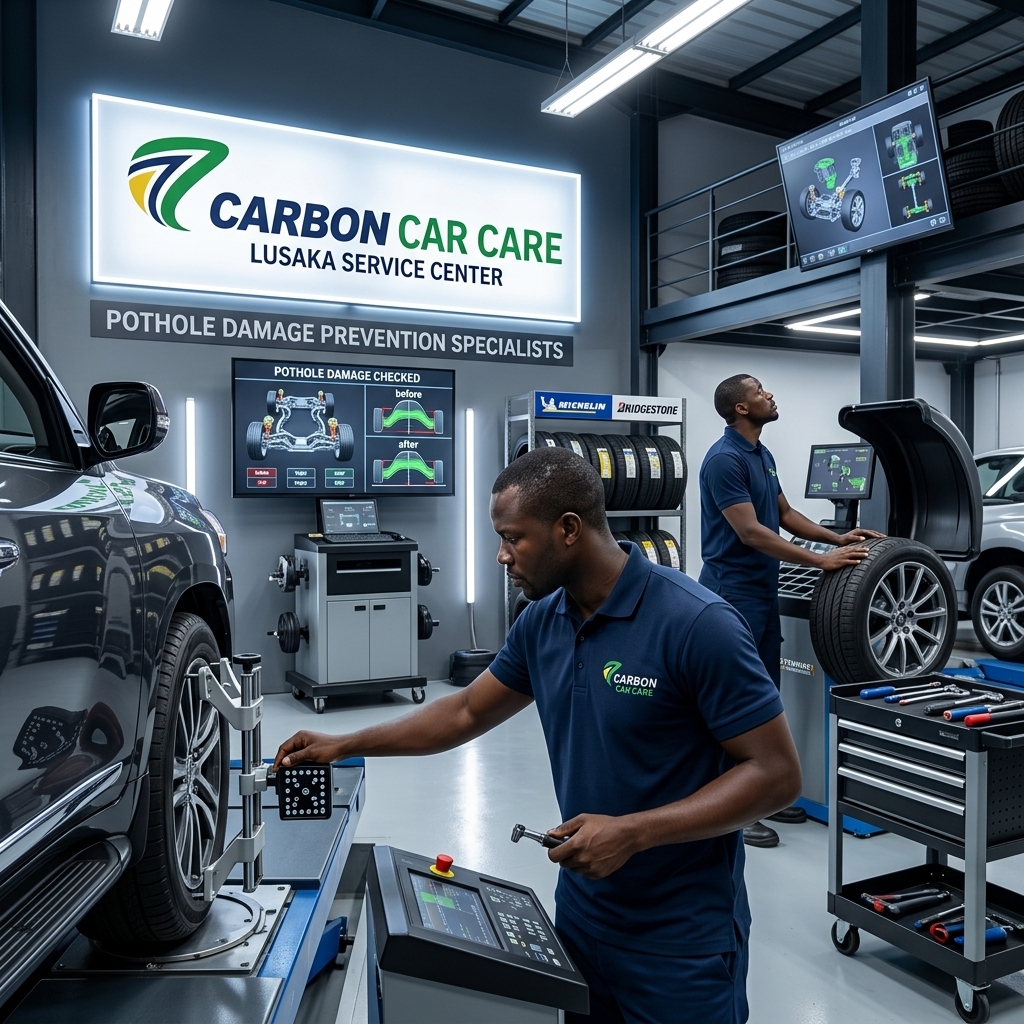
After any severe pothole impact, or at least every 10,000 kilometers, you should invest in a professional wheel alignment. Carbon365 Lusaka uses advanced 3D laser alignment technology to measure and correct your vehicle’s camber, caster, and toe angles with millimeter precision.
Proper alignment ensures that your tyres roll smoothly, the tread wears evenly across the entire surface, and the vehicle handles predictably when you need to swerve quickly to avoid the next pothole. Considering the high wheel alignment cost Lusaka is negligible compared to replacing a set of prematurely destroyed premium tyres, it is the smartest maintenance investment you can make.
Visit Carbon365 Lusaka for a Pothole-Resistant Tyre Fitting
Don’t let Lusaka’s potholes dictate the lifespan of your tyres and suspension. Proactive maintenance and the right equipment are the keys to a smooth, stress-free driving experience.
Whether you need a new set of reinforced Dunlop tyres, a precision 3D wheel alignment, or a comprehensive suspension health check, the experts at Carbon365 Lusaka are ready to assist. We ensure your vehicle is equipped to handle Zambia’s toughest road conditions.
🙋 Frequently Asked Questions (FAQ)
1. I hit a massive pothole, but the tyre didn’t burst. Should I still be worried?
Yes. A severe impact can cause internal structural damage to the tyre that isn’t immediately visible. It can also bend your rim or throw your wheels out of alignment. We strongly recommend having the tyre, rim, and wheel alignment professionally inspected after any hard impact to prevent a blowout later on.
2. Can you repair a tyre with a sidewall bulge?
No. A bubble or bulge on the sidewall indicates that the internal cords and belts have been severed by a pinch shock. The tyre’s structural integrity is permanently compromised, and it cannot be repaired. It must be replaced immediately, as it is at an extremely high risk of blowing out.
3. How do I know if my wheel alignment is off after hitting a pothole?
Common signs of misalignment include the vehicle pulling to the left or right, the steering wheel being off-centre when driving straight, a loose or wandering steering feel, and uneven tyre wear (especially on the inner or outer edges). However, minor misalignments may not have obvious symptoms immediately, which is why periodic checks are recommended.
4. Are wider, low-profile tyres worse for potholes?
Yes. Low-profile tyres have very short sidewalls, leaving very little distance between the road and the metal rim. Because there is less rubber and air to absorb the impact, low-profile tyres are significantly more prone to pinch shocks, blowouts, and rim damage when hitting potholes compared to standard tyres with taller sidewalls.